

Are you making the most of it?
The pursuit of happiness…
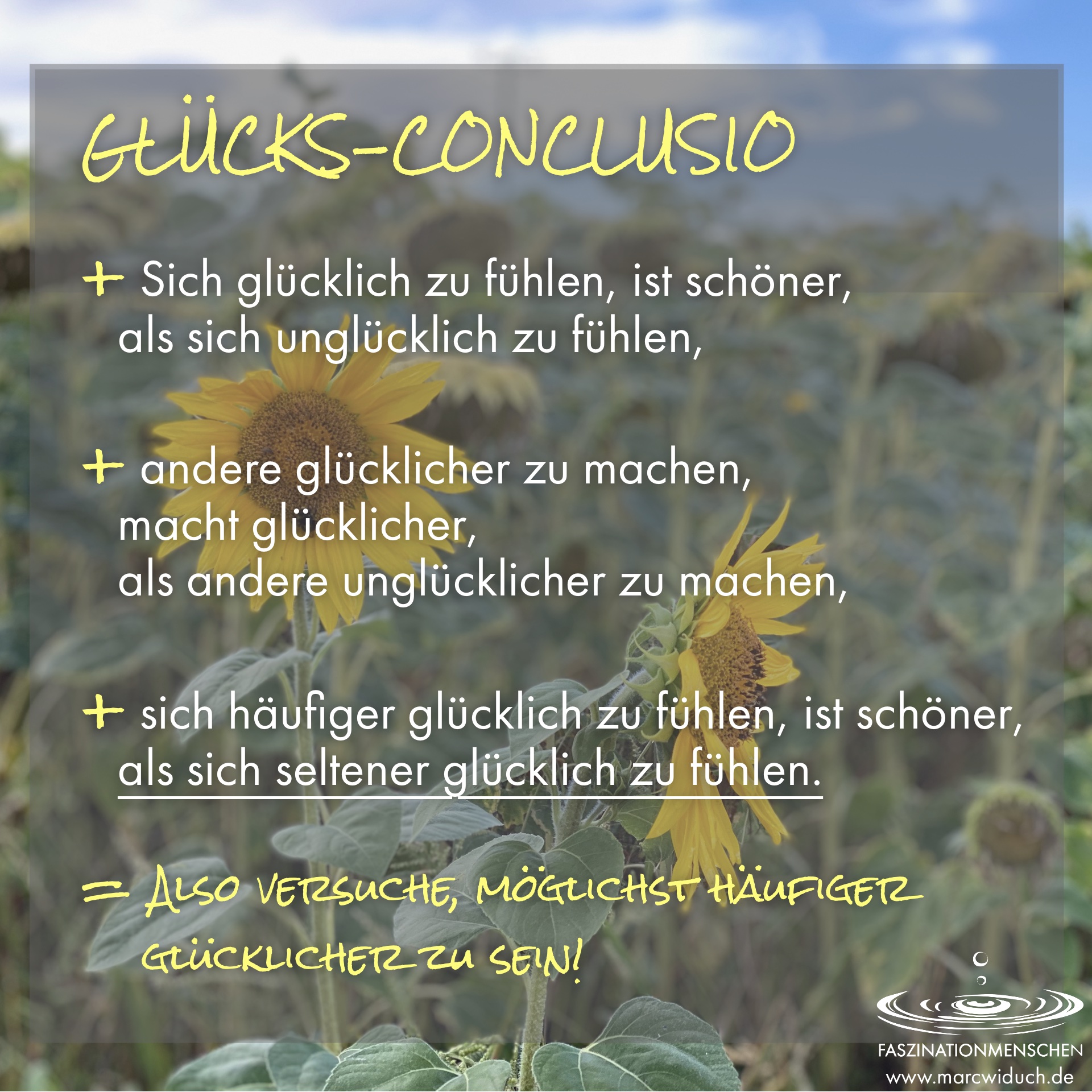
So what does ‘making the most of it’ mean? If you follow the statements of countless people from past generations looking back at the end of their lives, the answers are always the same: to have led a happy life, to have meant something positive to others, not to be forgotten right away. No one on their deathbed says, ‘if only I had worried more’, or ‘if only I had been unhappy more often’, or ‘if only I had been even less significant’. ‘The most’ doesn’t mean striving for an exaggerated maximum, but simply having been rather happy on most of the days available. Carpe diem, ars vivendi, mindfulness, YOLO, hakuna matata: there are plenty of sayings and self-help guides, but neither philosophers nor scientists, spiritual teachers nor influencers have real one-size-fits-all solutions. That’s impossible anyway, because we humans are one of a kind, in different circumstances. Everyone needs something a little different, and yet there are a few simple steps that can make the way easier. So ‘making the most of it’ means trying to strive for happiness, and every now and then mindfully checking whether it is working out and also feels that way.

Do you know what makes you happy?
If you don’t ask…
Leading a mostly happy life is also in your hands. But how? If you know what makes you happy in a lasting way, it is easier to strive for it. It is fairly certain that, as beings who evolved to live in groups, we are happier when we are well connected with other people. According to Albert Schweitzer, happiness doubles when we share it. In this sense, it is more than okay, and not selfish, to strive to be happier, because that may also enable other people to be happier.
Of course, there is also the selfish form of being fixated on your own happiness. The dark side, so to speak. The American Declaration of Independence says that every person has the right to the pursuit of happiness, unfortunately often understood in practice as ‘the right of the strongest’. Competition can be good for business, no question, but this toxic form is rarely sustainable. In my experience, this selfish variant eventually comes at your own expense, but also at the expense of others and of the environment in which others, alongside and after us, also try to lead a happy life.
Wouldn’t it be nice if our mostly happy life also meant more to others than just the trade value of the H2O/C/O atoms we are made of (according to a DW report in German, just under 10 euros) or the still mostly negative footprint in our environmental balance? If you see yourself as the sum of all your effects, on others too, that’s a good start.
At work or in private?
Leading question, sorry…
You are one! A person who probably works to earn a living or, if you don’t need the extra money, at least to experience meaning and connection. The discussion about a better ‘work-life balance’ that came up in the early 1990s is still used, for understandable reasons, mainly by employers in their own interest. Managers used to learn the rule of three: retaining workers means securing loyalty through dependence. Talented people were pushed to settle down, start a family and take on debt. Where it is economically possible, ‘life balance’ is increasingly taking hold as the better perspective. Work can be one important part of life. A good indicator of your life balance is whether you enjoy getting up almost every morning and, if you still think in terms of vacation and work, whether you can enjoy your vacation or spend half of it sick most of the time. Being happy is a holistic approach and needs a look at individual aspects and at the balance.
How much are you worth to yourself?